
Topic
| UNICEF | Topic | Member states | Links and documents | Team members |
|---|
Topic: “AI in Education: Opportunities and Risks for Children and Youth”
Overview of the topic
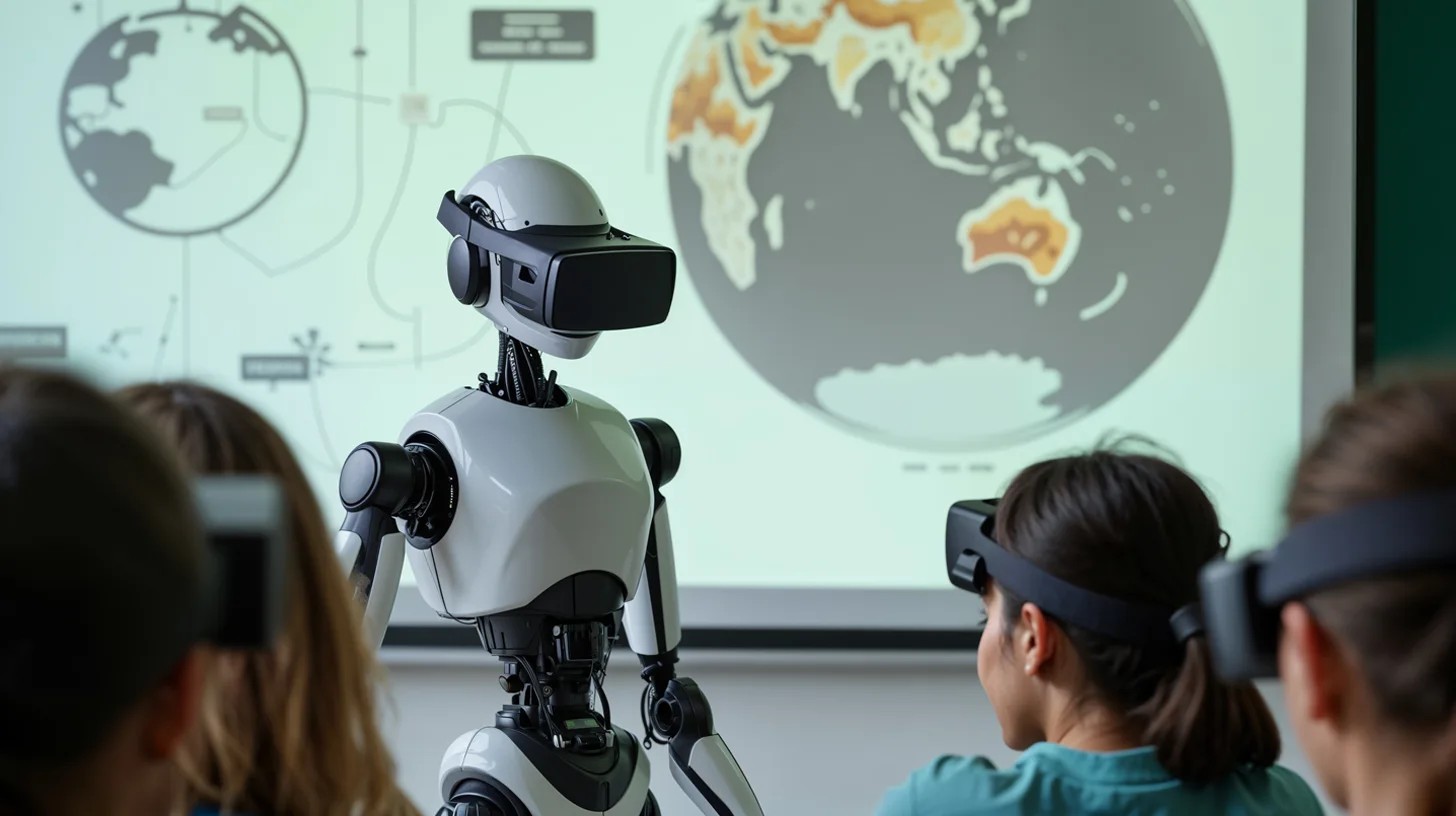
Artificial intelligence at its core refers to a system and software capable of performing tasks traditionally dependent on human cognition, such as learning from experience, recognizing patterns, solving problems, or interpreting language. Although this definition may sound technical, the presence of AI in everyday life has already made these concepts surprisingly familiar. We encounter AI when a phone suggests the quickest route home, when a streaming platform recommends a new series, or when a chatbot helps clarify a question at midnight. In education, the same underlying technology is quietly reshaping how children and young people learn, interact, and imagine their futures.
In recent years, educational spaces have become testing grounds for new digital tools that promise to personalize learning in ways previous generations could never have imagined. AI-powered platforms can adjust the difficulty of an exercise in real time, offer targeted support to a struggling student, or challenge an advanced learner with more complex material. For many teachers, these tools feel like having an attentive assistant who can monitor each student simultaneously, freeing them to focus on mentoring, conversation, and the human dimension of teaching that technology cannot replace.
But beneath these appealing possibilities lies a complex reality. AI in education does not operate in a vacuum; it functions within a digital ecosystem shaped by access, privilege, and unequal infrastructure. In countries or communities where connectivity is unreliable or digital devices are scarce, AI-enhanced learning remains out of reach. For these children, the promise of technological innovation risks becoming another reminder of structural inequality. Meanwhile, for students who do have access, AI introduces its own challenges around data privacy, transparency, and fairness. Every interaction with an educational app leaves a trail of personal information that must be stored, protected, and ethically managed. When these systems learn from biased datasets, they can unintentionally reinforce stereotypes or treat certain groups of students differently.
This is why discussions about AI in education inevitably become discussions about rights. The question is no longer only how we can use AI to improve learning, but also how we can ensure that its use is safe, fair, and grounded in respect for children’s autonomy and dignity. Organizations such as UNICEF and UNESCO have emphasized that technological innovation should never come at the cost of children’s well-being. Their frameworks highlight the need for ethical governance, strong data protection rules, and meaningful oversight so that AI supports learning rather than undermines it.
At the same time, it is important to recognize the extraordinary potential of these technologies. When used responsibly, AI can help bridge educational gaps, especially in areas facing teacher shortages or lacking specialized support for children with disabilities. It can offer personalized pathways for lifelong learning, equipping young people with the digital and problem-solving skills they will need in an increasingly unpredictable job market. It can make classrooms more inclusive and responsive, and it can assist teachers in understanding student needs more deeply than traditional assessment methods allow.
The challenge, then, is to balance ambition with caution. Policymakers, educators, and technology developers must work together to ensure that AI becomes a tool for empowerment rather than exclusion. This involves investing in digital infrastructure, providing teachers with adequate training, and creating regulatory frameworks that safeguard children’s rights while allowing room for innovation. Most importantly, it requires listening to the voices of young people themselves, who are often the first to adopt new technologies and the first to feel the consequences when something goes wrong.
Artificial intelligence may never replace the warmth of a teacher’s encouragement or the shared curiosity that emerges in a classroom, but it can complement these experiences in meaningful ways. If guided thoughtfully, AI has the potential to expand the boundaries of what education can offer and to help shape a future in which every child has the opportunity to learn, grow, and thrive.
Proposed Discussion Questions on the Committee Topic:
- How can AI help reduce global educational inequalities, especially for children in underserved or conflict-affected areas, while still supporting teachers, strengthening core subjects, and respecting local cultures?
- Given the already existing challenges children face in the digital world, including safety, wellbeing, and unequal access to technology, What are the long-term implications of integrating AI into children’s daily learning environments?
- How should education systems adapt to integrate AI in ways that empower teachers, promote critical and independent thinking among students, and uphold human rights and ethical principles in learning?